Stay informed about the latest industry trends, best practices, and insights with our regularly updated blog. We cover a wide range of topics, including:
Download in-depth white papers and case studies that provide valuable insights and real-world examples of successful logistics solutions. Our resources cover topics such as:
Access useful tools and calculators to help you with your logistics planning and decision-making. Our tools include:
Determine the freight class of your shipment to accurately estimate shipping costs.
Estimate the cost of shipping your goods based on various factors, such as distance, weight, and freight class.
Calculate the environmental impact of your shipments and explore ways to reduce your carbon footprint.
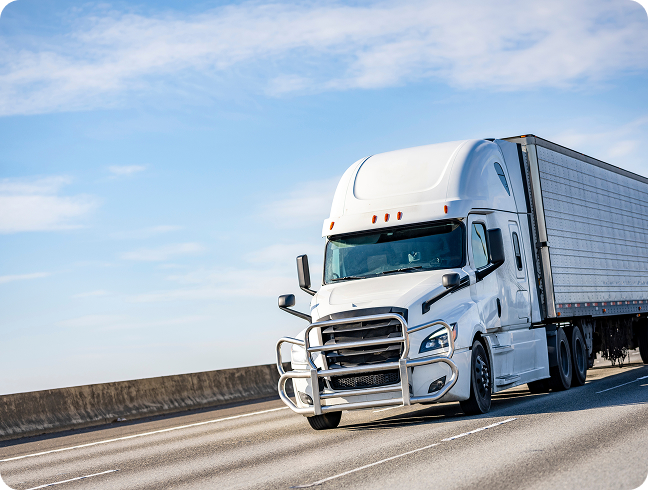
○ Truckload (TL) shipping is used for large shipments that fill an entire truck trailer. The truck carries only your goods and travels directly from the pickup location to the delivery destination. This results in faster transit times and reduced handling, minimizing the risk of damage.
○ Less than truckload (LTL) shipping is ideal for smaller shipments that don’t require a full truck. Your freight is consolidated with other shipments heading in the same direction. This shared-truckload approach allows you to benefit from reduced shipping costs, as you only pay for the space your shipment occupies. However, LTL shipping may involve multiple stops and transfers, potentially leading to longer transit times.
○ Truckload (TL) shipping is used for large shipments that fill an entire truck trailer. The truck carries only your goods and travels directly from the pickup location to the delivery destination. This results in faster transit times and reduced handling, minimizing the risk of damage.
○ Less than truckload (LTL) shipping is ideal for smaller shipments that don’t require a full truck. Your freight is consolidated with other shipments heading in the same direction. This shared-truckload approach allows you to benefit from reduced shipping costs, as you only pay for the space your shipment occupies. However, LTL shipping may involve multiple stops and transfers, potentially leading to longer transit times.
○ Truckload (TL) shipping is used for large shipments that fill an entire truck trailer. The truck carries only your goods and travels directly from the pickup location to the delivery destination. This results in faster transit times and reduced handling, minimizing the risk of damage.
○ Less than truckload (LTL) shipping is ideal for smaller shipments that don’t require a full truck. Your freight is consolidated with other shipments heading in the same direction. This shared-truckload approach allows you to benefit from reduced shipping costs, as you only pay for the space your shipment occupies. However, LTL shipping may involve multiple stops and transfers, potentially leading to longer transit times.
○ Truckload (TL) shipping is used for large shipments that fill an entire truck trailer. The truck carries only your goods and travels directly from the pickup location to the delivery destination. This results in faster transit times and reduced handling, minimizing the risk of damage.
○ Less than truckload (LTL) shipping is ideal for smaller shipments that don’t require a full truck. Your freight is consolidated with other shipments heading in the same direction. This shared-truckload approach allows you to benefit from reduced shipping costs, as you only pay for the space your shipment occupies. However, LTL shipping may involve multiple stops and transfers, potentially leading to longer transit times.